


Azure Kubernetes Service (AKS): Running Containers at Enterprise Scale
Introduction Containers have transformed how applications are built and deployed, and Kubernetes has emerged as the standard for orchestrating containerized…
 Skip to content
Development Alex Jordan 3 min read
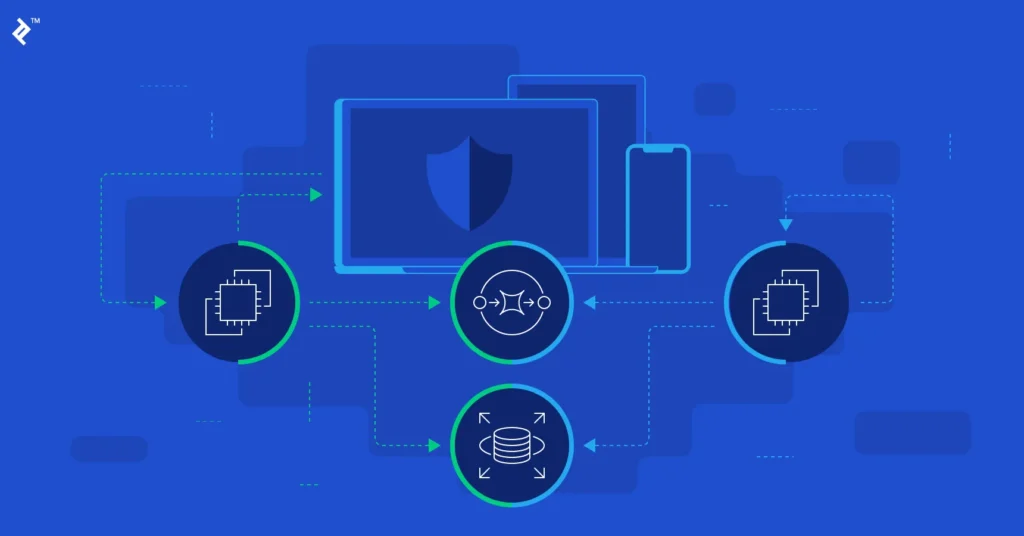
Great software fails without great infrastructure architecture. As businesses grow and traffic patterns become less predictable, the underlying cloud architecture must be capable of scaling seamlessly and recovering from failures automatically. AWS provides all the building blocks needed to create highly scalable and resilient architectures, but knowing how to combine them effectively requires expertise and experience.
Scalability in AWS means your infrastructure can handle increased load without manual intervention and without service degradation. There are two types of scaling: vertical scaling (adding more power to existing instances) and horizontal scaling (adding more instances).
Horizontal scaling is almost always preferable in the cloud because it is more cost-effective and eliminates single points of failure. AWS Auto Scaling Groups automatically add or remove EC2 instances based on demand metrics you define, ensuring you always have the right amount of capacity.
High availability means your application remains accessible even when individual components fail. In AWS, this is achieved by distributing workloads across multiple Availability Zones within a region.
Every critical component should be deployed in at least two Availability Zones. Elastic Load Balancers automatically route traffic away from unhealthy instances. RDS Multi-AZ provides automatic database failover with minimal downtime.
For global applications, AWS Route 53 with health checks and failover routing enables automatic failover between entire AWS regions.
AWS provides the Well-Architected Framework as a guide for designing cloud systems. It consists of six pillars: Operational Excellence, Security, Reliability, Performance Efficiency, Cost Optimization, and Sustainability.
At Ozy Solutions, our AWS architecture design practice is built around the Well-Architected Framework. We conduct regular Well-Architected Reviews to assess existing architectures against these pillars and provide actionable recommendations for improvement.
Read more about our architectural approach on the Ozy Solutions blog.
Modern applications increasingly use microservices architectures where large applications are broken into small, independently deployable services. AWS supports this pattern with Amazon ECS for container orchestration, Amazon EKS for Kubernetes, and AWS Lambda for serverless functions.
Microservices architectures improve team autonomy, enable independent scaling of components, and reduce the blast radius of failures. Each service can be developed, deployed, and scaled independently.
Your data architecture is as important as your compute architecture. Design your data layer with clear separation between transactional data, analytical data, and operational data.
Use purpose-built databases for different workloads: RDS or Aurora for relational data, DynamoDB for low-latency key-value access, ElastiCache for caching, and Redshift for analytical queries. S3 serves as the foundation for your data lake strategy.
Building scalable and resilient AWS architecture requires deep knowledge of AWS services and proven design patterns. Ozy Solutions’ AWS architecture design team has the expertise to design systems that meet your performance, reliability, and cost requirements. Contact us today to discuss your architecture needs.

Keep Reading
Introduction Containers have transformed how applications are built and deployed, and Kubernetes has emerged as the standard for orchestrating containerized…
Introduction Cloud-native development is the practice of building applications that are designed specifically to take advantage of cloud computing capabilities.…
Introduction As businesses expand globally and users increasingly expect sub-second response times regardless of their location, single-region AWS deployments often…
Let’s Talk
Partner with a creative tech team to design, develop, and launch software solutions built to scale your business on time and on budget.
Novaryn LLC, 1331 Merl Place
Longmont, CO 80501

