


Azure Kubernetes Service (AKS): Running Containers at Enterprise Scale
Introduction Containers have transformed how applications are built and deployed, and Kubernetes has emerged as the standard for orchestrating containerized…
 Skip to content
Development Alex Jordan 3 min read
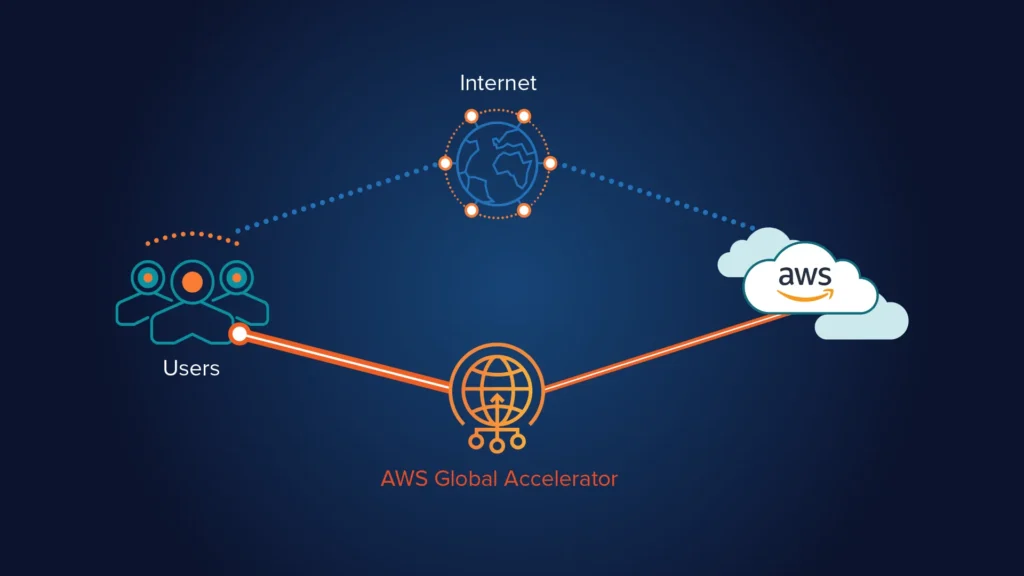
As businesses expand globally and users increasingly expect sub-second response times regardless of their location, single-region AWS deployments often become insufficient. Multi-region AWS architectures solve these challenges by distributing workloads across multiple geographic locations. This blog guides you through the decision-making process and technical implementation of AWS multi-region architectures.
Not every application needs multi-region deployment. Start with the business and technical drivers:
Latency Requirements: If you have users in multiple continents and your application is latency-sensitive, serving them from a single region will result in poor user experiences.
Disaster Recovery: Regulatory requirements or business continuity policies may mandate that you maintain complete redundancy in a separate geographic region.
Data Residency: Some jurisdictions require that certain data remain within specific geographic boundaries, necessitating regional data stores.
Compliance: Industries like banking and healthcare often have strict requirements about data location and system availability.
Active-Passive: One region handles all traffic while a secondary region maintains a warm standby. This provides excellent disaster recovery but does not reduce latency for users near the secondary region.
Active-Active: Traffic is distributed across all regions simultaneously. This provides the best performance and resilience but is significantly more complex to implement, especially for stateful workloads.
Follow-the-Sun: Traffic is routed to the closest region during business hours, with regions handing off to each other as the day progresses around the globe.
The biggest technical challenge in multi-region architectures is data consistency. When users in different regions write to their local database, keeping all regions in sync without conflicts is complex.
Amazon DynamoDB Global Tables provides multi-region, multi-active replication for DynamoDB. Aurora Global Database enables fast cross-region replication of relational databases. For less demanding consistency requirements, S3 cross-region replication works well for object storage.
Ozy Solutions helps clients choose the right data replication strategy based on their consistency requirements and acceptable latency trade-offs.
Amazon CloudFront is a content delivery network that caches and serves content from edge locations close to your users worldwide. For many applications, CloudFront alone can dramatically improve global performance without requiring a full multi-region deployment.
For dynamic content that cannot be cached, Lambda@Edge lets you run code at CloudFront edge locations, enabling intelligent request routing and response customization at the edge.
Multi-region architectures typically cost two to three times more than single-region deployments. Data transfer between regions is billed separately and can be a significant expense. Always model your multi-region cost carefully before committing.
Visit our blog section for cost optimization strategies for multi-region AWS deployments.
Multi-region AWS architecture is a powerful but complex capability that requires careful planning and expertise. Ozy Solutions’ AWS architecture design team has successfully designed and implemented multi-region architectures for clients across various industries. We can help you determine whether multi-region deployment makes sense for your specific situation and implement it effectively.

Keep Reading
Introduction Containers have transformed how applications are built and deployed, and Kubernetes has emerged as the standard for orchestrating containerized…
Introduction Cloud-native development is the practice of building applications that are designed specifically to take advantage of cloud computing capabilities.…
Introduction Great software fails without great infrastructure architecture. As businesses grow and traffic patterns become less predictable, the underlying cloud…
Let’s Talk
Partner with a creative tech team to design, develop, and launch software solutions built to scale your business on time and on budget.
Novaryn LLC, 1331 Merl Place
Longmont, CO 80501

