




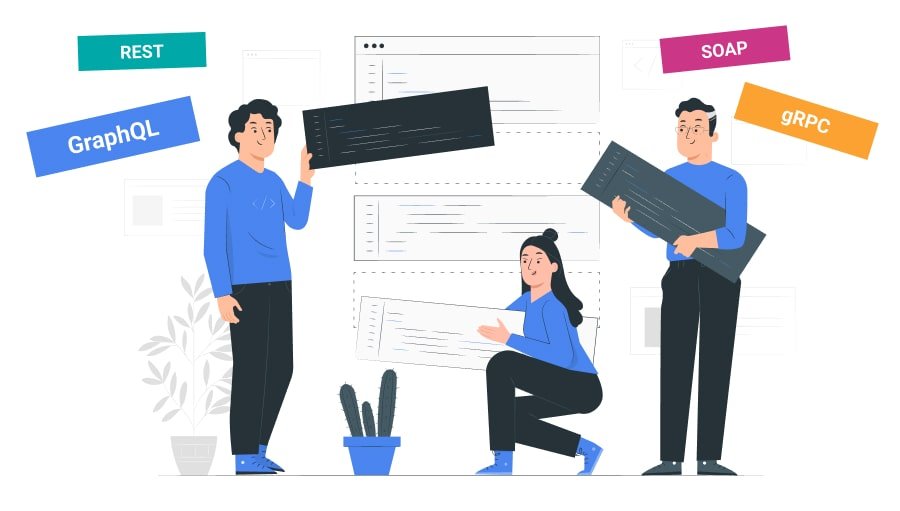
Every new API project starts with the same question: which architecture should we use? The internet is full of passionate advocates for REST, GraphQL, and gRPC, each insisting their preferred approach is the right one. The truth, as usual, is more nuanced. Each architecture excels in specific scenarios, and choosing wrong can mean either over-engineering a simple problem or under-serving a complex one.
Let me skip the textbook definitions and focus on practical guidance. When you are sitting in a planning meeting deciding how to build your next API, here is what actually matters.
REST: The Reliable Workhorse
REST is still the right choice for the majority of public-facing APIs. It is well understood by virtually every developer on the planet, supported by every programming language and framework, and works seamlessly with standard HTTP caching. If you are building an API that external developers will consume, REST’s familiarity alone is a significant advantage.
Where REST struggles is with complex data fetching. If your clients frequently need to make multiple requests to assemble the data they need, or if different clients need different subsets of the same data, REST endpoints can become either too granular or too bloated.
GraphQL: When Flexibility Matters
GraphQL shines when you have diverse clients with different data needs. A mobile app that needs minimal data, a web dashboard that needs detailed records, and a reporting service that needs aggregated data can all use the same GraphQL API, each requesting exactly what it needs. This eliminates over-fetching and under-fetching, which are REST’s most common pain points.
The trade-off is complexity. GraphQL requires more server-side infrastructure, careful attention to query performance, and protection against expensive queries that could bring your servers down. It is not harder to build, but it is harder to operate well.
gRPC: For Internal and High-Performance Needs
gRPC is purpose-built for service-to-service communication. Its binary protocol is faster than JSON-based alternatives, its strong typing catches integration errors at compile time, and its streaming capabilities handle real-time data flows elegantly. For microservices architectures where dozens of services communicate constantly, gRPC reduces latency and bandwidth consumption significantly.
Working with experienced API development professionals helps you navigate these choices confidently. Often, the best solution uses multiple architectures: gRPC for internal service communication, REST for public APIs, and GraphQL for complex client-facing data needs. For ongoing API strategy insights, check our blog.
