
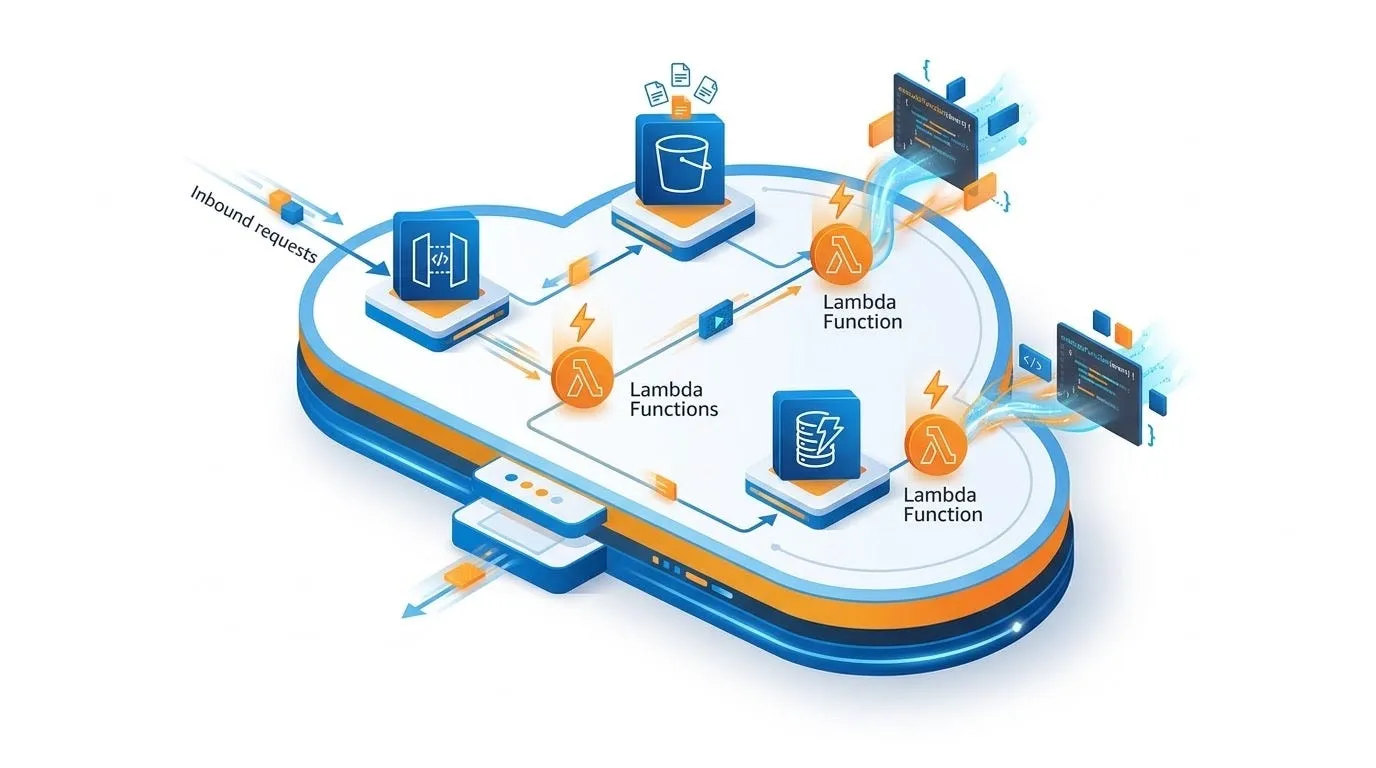
Getting Started with AWS Lambda: Building Your First Serverless Application
Introduction AWS Lambda has fundamentally changed how developers build and deploy applications. By eliminating the need to manage servers entirely,…
Development Alex Jordan 3 min read

Two years ago, recommending cross-platform development required a disclaimer about performance compromises and limited native feature access. That disclaimer has shrunk considerably. Flutter and React Native have matured to the point where the vast majority of mobile apps, probably eighty-five to ninety percent of business applications, can be built cross-platform without users noticing any difference from a native app. The five-second delay that used to plague cross-platform apps during complex animations is gone. The jittery scrolling is gone.
That said, the remaining ten to fifteen percent of apps that genuinely need native development still exist, and knowing whether your app falls into that category saves you from either overspending on native when cross-platform would suffice or underspending on cross-platform when native is actually required.
Business applications that primarily display data, collect user input, and communicate with backend services are perfect cross-platform candidates. CRM mobile clients, inventory management apps, field service tools, customer-facing portals, content consumption apps, and ecommerce storefronts all work beautifully in Flutter or React Native. The code sharing between platforms saves thirty to fifty percent compared to building two separate native apps, and the development speed is genuinely faster because your team maintains one codebase instead of two.
Flutter deserves particular attention in 2026 because its capability has expanded beyond mobile. A single Flutter codebase can target iOS, Android, web, and desktop, which means one development effort reaches every platform your users care about. For businesses that need presence across multiple platforms without multiplying their development investment, this efficiency is compelling.
Apps that push device hardware to its limits still benefit from native development. Augmented reality experiences that need low-latency camera processing, fitness apps that require continuous background health sensor monitoring, music production apps with real-time audio processing, and graphically intensive games all perform measurably better when built with native code that accesses hardware without an abstraction layer.
Apps that need to deeply integrate with platform-specific features that cross-platform frameworks have not yet fully supported also warrant native consideration. Advanced Bluetooth communication, specialized accessibility features, and cutting-edge platform capabilities that Apple or Google introduce in their latest OS releases typically reach native developers first, with cross-platform support following months later.
Be specific about what your app needs to do. List every feature, every hardware interaction, and every platform-specific requirement. Then evaluate whether cross-platform frameworks support all of those requirements at the quality level your users expect. An experienced mobile development team gives you an honest assessment rather than steering you toward whatever technology they are most comfortable with. The right platform choice saves money without compromising user experience. The wrong one costs money on either end. For more on mobile development strategy, explore our blog.

Keep Reading
Introduction AWS Lambda has fundamentally changed how developers build and deploy applications. By eliminating the need to manage servers entirely,…
Introduction As serverless applications grow more sophisticated, the need for coordinating multiple Lambda functions and services in complex workflows becomes…
Introduction Two of the most important technology choices in modern cloud application development are serverless functions (AWS Lambda) and containers…
Let’s Talk
Partner with a creative tech team to design, develop, and launch software solutions built to scale your business on time and on budget.
Novaryn LLC, 1331 Merl Place
Longmont, CO 80501